

Precise and accurate quantitative measurements of biological systems are crucial to improving understanding of biology. Such measurements often help to elucidate how biological systems work and provide the basis for model construction and validation. Differences between predicted and measured system behavior can identify gaps in understanding and explain why synthetic systems don't always behave as intended.
Mathematics in biology aims at the mathematical representation, treatment and modeling of biological processes, using a variety of applied mathematical techniques. It has both theoretical and practical applications in biological research. Usually, a biological system is converted into a system of equations or rules. The model often makes assumptions about the system. The equations may also make assumptions about the nature of what may occur. The solution of the equations or rules, by either analytical or numerical means, describes how the biological system behaves either over time or at equilibrium, which might not be evident to the experimenter.
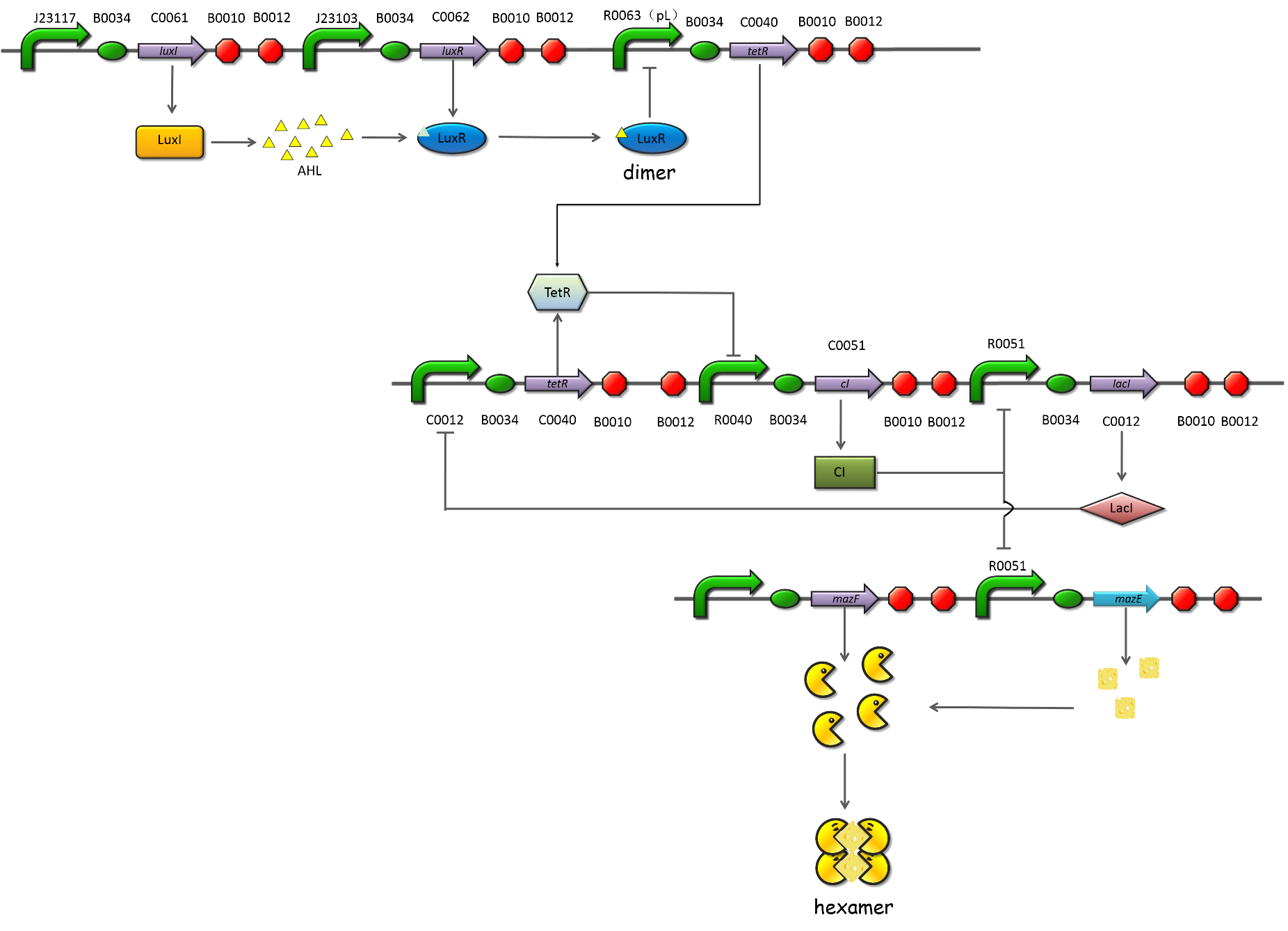
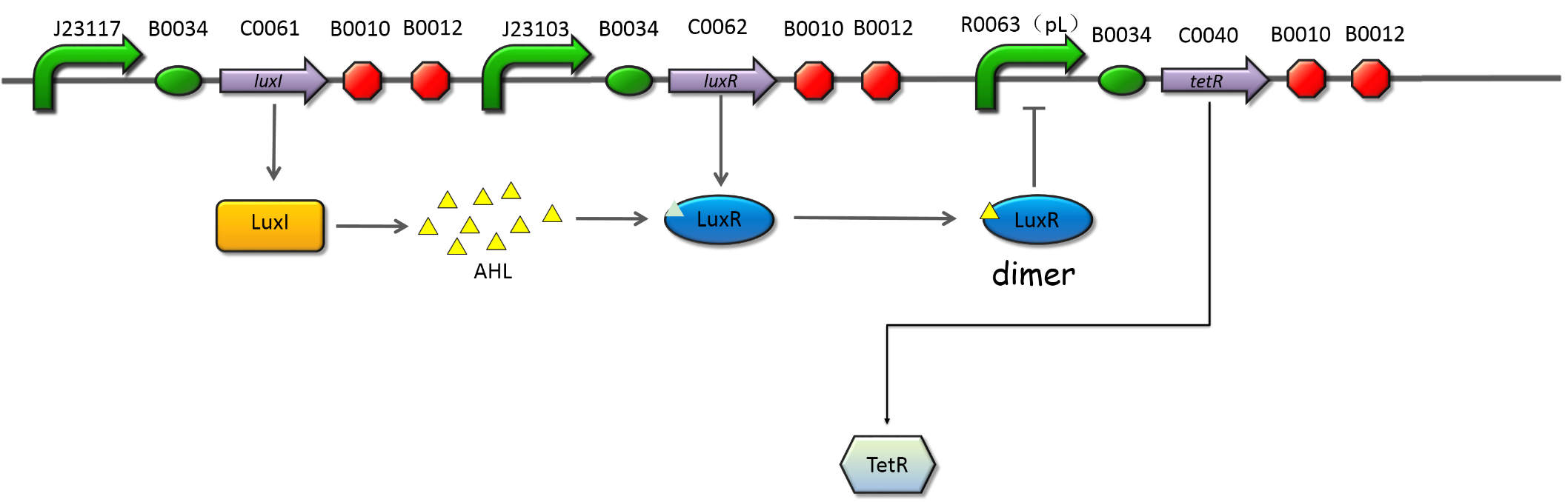
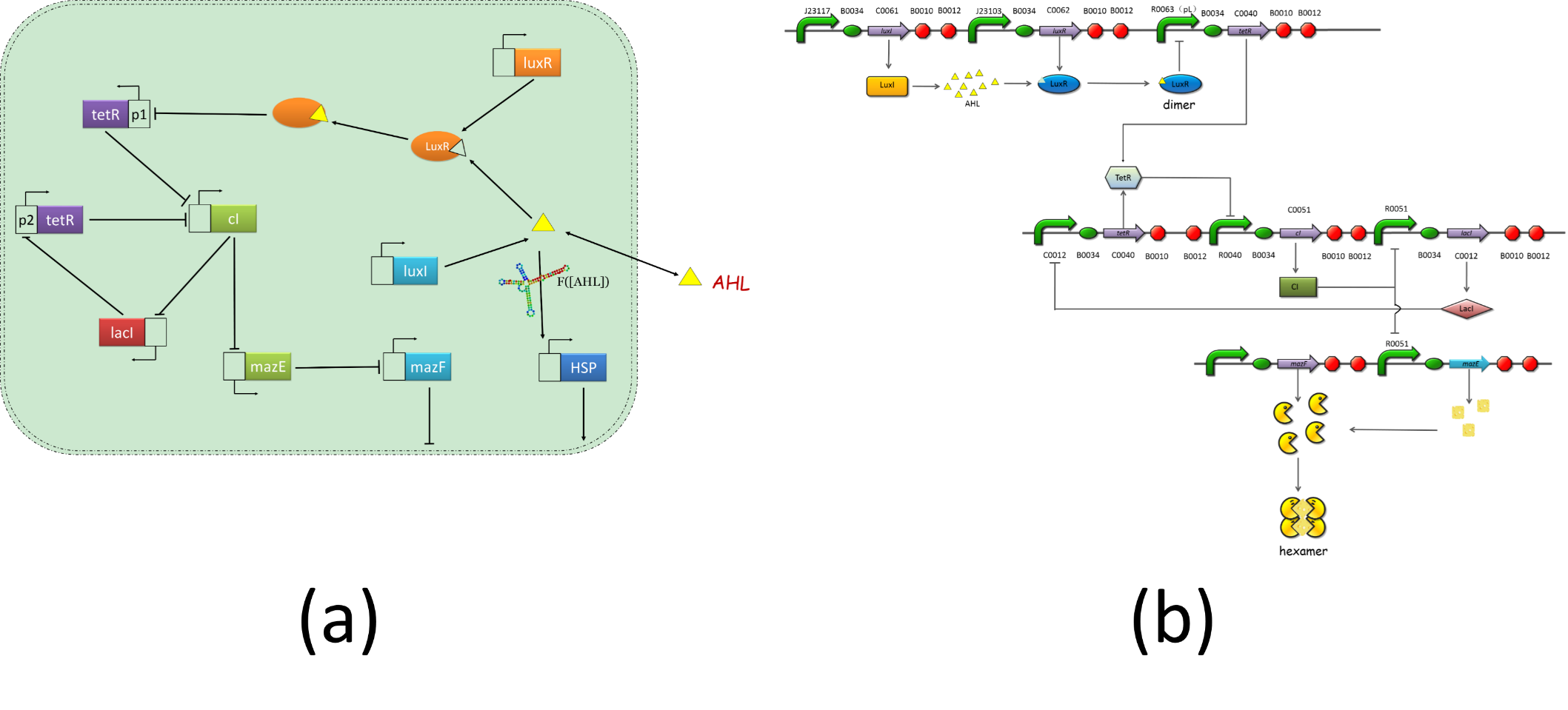 Fig.1 the gene regulatory network (GRN) of the intelligent microbial heat regulating heat engine. (a) shows the regulatory relationships of these genes. (b) is the detailed diagram of the GRN of the quorum control system.